The Dynamics of Player Retention Through Layered Incentive Models in Multi-Device Gaming Platforms
Written by Sage Flores · Jun 19, 2026
The Dynamics of Player Retention Through Layered Incentive Models in Multi-Device Gaming Platforms
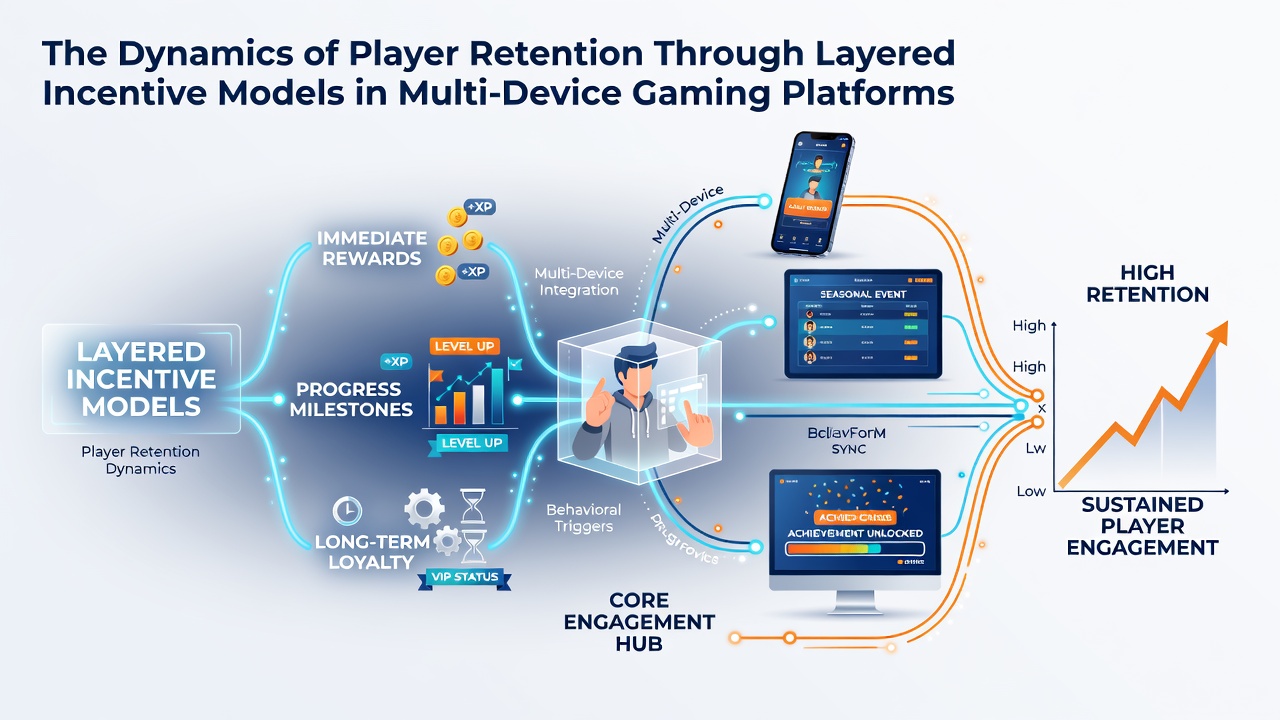
Multi-device gaming platforms have expanded rapidly in recent years, allowing participants to switch between smartphones, tablets, consoles, and personal computers while maintaining progress in the same titles. Layered incentive models sit at the center of retention strategies on these networks, offering combinations of daily login rewards, progression tiers, cross-platform bonuses, and exclusive content unlocks that accumulate over time. These structures encourage consistent engagement because rewards scale with participation frequency and duration across different hardware environments.
Core Components of Layered Incentive Systems
Layered models typically begin with immediate entry-level rewards such as virtual currency or experience points that appear upon first login each day, then build into mid-tier benefits like character customizations or temporary power-ups available after several consecutive sessions. Higher layers introduce seasonal events and loyalty badges that carry over when players move from one device to another, creating continuity that single-device systems rarely achieve. Data from industry tracking services shows these stacked elements increase session counts because participants return to avoid losing streak multipliers or missing limited-time collections.
Platforms synchronize account data through centralized servers so that progress on a mobile device during a commute transfers directly to a console at home without resetting counters or requiring duplicate actions. This technical linkage supports the incentive layers by preserving earned status regardless of hardware choice. Observers note that titles employing such synchronization report higher retention rates in the first three months compared to games lacking cross-device continuity.
Retention Patterns Across Device Ecosystems
Research conducted by the Entertainment Software Association indicates that players who engage with layered rewards on multiple devices maintain accounts 40 percent longer on average than those restricted to one platform. The pattern emerges because mobile sessions often serve as quick check-ins for collecting base rewards, while longer console or PC play sessions unlock deeper tier advancements. This division of labor across devices keeps overall activity steady even when individual device usage fluctuates.
Seasonal content drops further reinforce retention because they reset certain counters while preserving core progress, giving returning players fresh goals without erasing prior achievements. In June 2026 several major networks introduced updated synchronization protocols that reduced latency during device switches, allowing rewards to appear instantly and minimizing interruptions that previously caused drop-offs.
Technical Integration and Data Flow
Backend systems track behavioral metrics such as login frequency, reward redemption rates, and device transition patterns to adjust incentive layers dynamically. Algorithms identify when engagement dips on a particular device and surface tailored offers, like bonus items accessible only through that hardware, to rebalance activity. These adjustments occur without manual intervention, relying instead on aggregated anonymized data sets that highlight which combinations sustain participation longest.
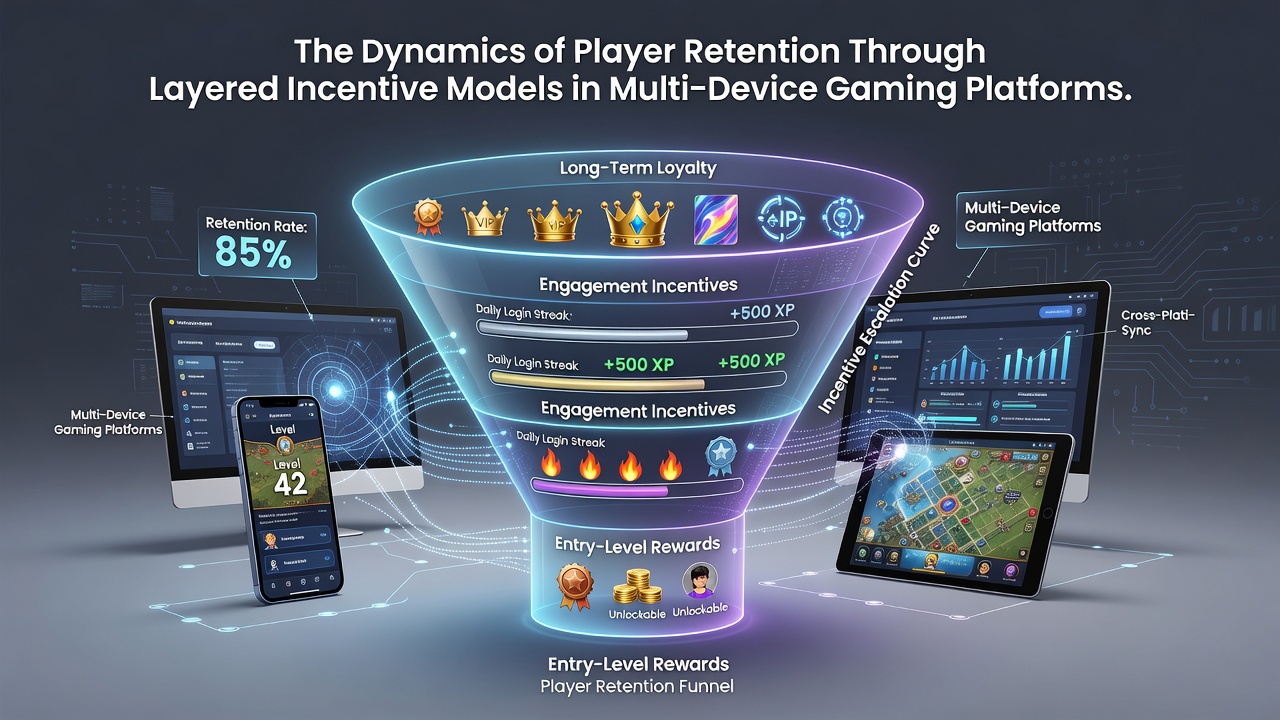
Cloud-based save states ensure that inventory items and tier standings remain identical across sessions, removing friction that once discouraged device switching. Developers have documented fewer account abandonments after implementing these unified databases, particularly among users who alternate between short mobile bursts and extended home sessions. The approach aligns incentives with natural usage habits rather than forcing all activity onto a single screen size.
Comparative Performance in Leading Titles
Popular cross-platform games demonstrate measurable differences in retention when layered incentives are present versus absent. Titles that tie battle pass progression to both quick mobile objectives and deeper console challenges retain participants through multiple content cycles, whereas games offering only uniform daily rewards see steeper declines after initial novelty fades. Figures from platform operators reveal that users completing at least three layers of incentives within a month exhibit the strongest long-term loyalty metrics.
Geographic variations appear as well, with regions having higher mobile penetration showing stronger uptake of device-specific reward branches. Australian regulatory filings on digital entertainment services, for instance, highlight how incentive layering correlates with sustained play across urban and regional user bases alike. Similar patterns surface in Canadian market analyses where cross-device continuity supports continued engagement even during periods of hardware upgrades.
Future Adjustments and Platform Evolution
Upcoming updates scheduled around mid-2026 focus on refining reward visibility so that layered benefits display consistently regardless of device resolution or input method. Developers continue testing hybrid models that combine time-based and activity-based triggers to accommodate diverse schedules. These refinements aim to maintain the momentum already established by existing synchronization tools while addressing edge cases such as interrupted connections during transitions.
Industry reports from organizations like the Interactive Software Federation of Europe track how these evolving systems influence overall player bases, noting steady growth in multi-device accounts when incentives remain accessible and cumulative. The emphasis stays on measurable continuity rather than isolated promotions.
Conclusion
Layered incentive models have become integral to retention on multi-device gaming platforms by aligning reward structures with flexible usage patterns. Synchronization technologies and dynamic adjustments allow participants to accumulate benefits seamlessly, supporting longer account lifespans across hardware types. Continued refinements through 2026 and beyond will likely build on current data flows to sustain engagement without introducing new barriers during device switches.